If you want to be noticed in your industry, getting more of your content into newsletters is a smart way to go.
People trust industry publications because they’re usually written by and for insiders. Think of them as reliable inbox briefings for professionals in that one niche or field. The most successful consistently provide value to email subscribers who are likely to be your perfect target audience.
This article breaks down how to get content featured in industry newsletters and shows how you can find Substack and LinkedIn newsletters using Reletter.
Table of Contents
1. Pick the right type of mention
Readers subscribe to industry newsletters for curated links, valuable insights, how-to guides and industry news, so that's the sort of info to provide. Depending on the industry and your role in it, you might choose one of these four mention categories:
Curated link worth reading
This is a classic newsletter mention. It usually includes a short blurb explaining what it is and why the content matters, and a link to the blog post, article, video or social media post. Send the editor a quick explanation, a tight suggested blurb, one link and a standout takeaway line they can quote.
Tool or resource
Let the newsletter editor know if you’ve got a powerful tool or standout resource that solves a real problem in your industry. Say who it’s for, how it helps and why it works. Consider offering early access, a limited-time special discount or free resources to their newsletter subscribers.
Trends and data
Mention data worth sharing, and add your viewpoint or audience takeaway (why it matters). Depending on your industry, examples of valuable content might be:
- Benchmarks
- Market maps
- Cost curves
- Adoption rates
- Policy impacts
- Emissions factors.
Offer the editor the best stat and your plain-English interpretation. For example, you might say why it's a game changer and what that means for the target audience. Include a chart or image the newsletter can use (and don't forget to mention permission/attribution guidance and links.)
Expert quote
This happens when you are seen as an authority in some way. Do you have a unique point to make or commentary on breaking news, new regulation, pricing shifts or major deals or technology inflection points in your industry?
Send the editor a pre-written, standalone quote along with your credentials. You might also include an optional longer paragraph they can pull from, or helpful tips on what their newsletter subscribers should do next.
2. Build a target list
Substack and LinkedIn host many industry newsletters, but finding the right ones can be time consuming. Here's how you can use Reletter to shorten the process.
Let's use the energy and climate tech industry as an example.
The easiest way to build a list is from the search screen. Enter your topic, then add filters, if needed. I'd recommend at least using the Active filter, so you only see newsletters that have recently published an issue.
Tap the Build a List button (top right corner) then tap the Add button on each newsletter you want to investigate.
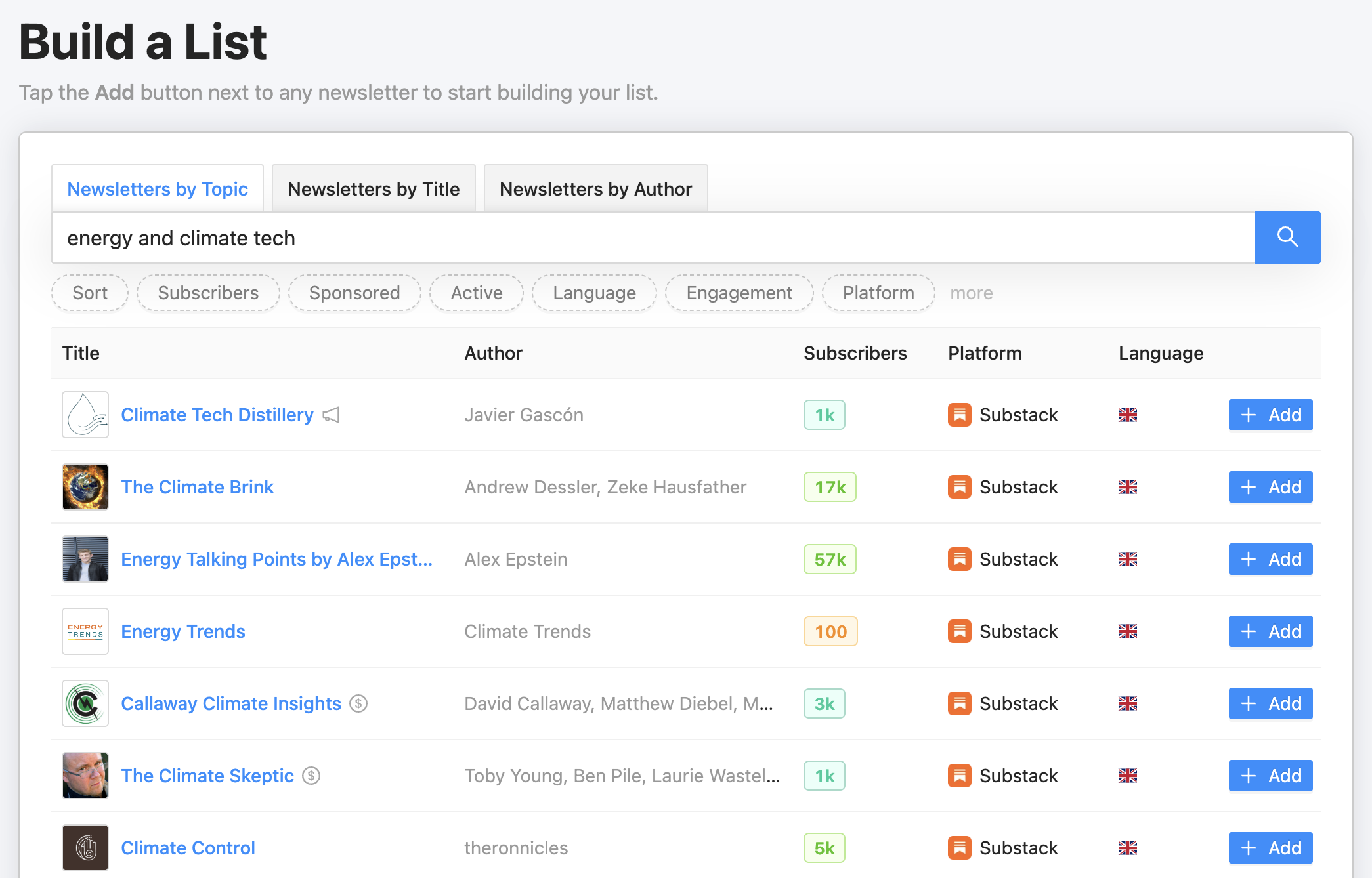
Reletter will build your list and suggest other newsletter ideas to try.
Tap the blue Go to List button to see your list and pipeline manager. (You can also access the list from anywhere in Reletter by opening Lists (top right, next to the Home button.)
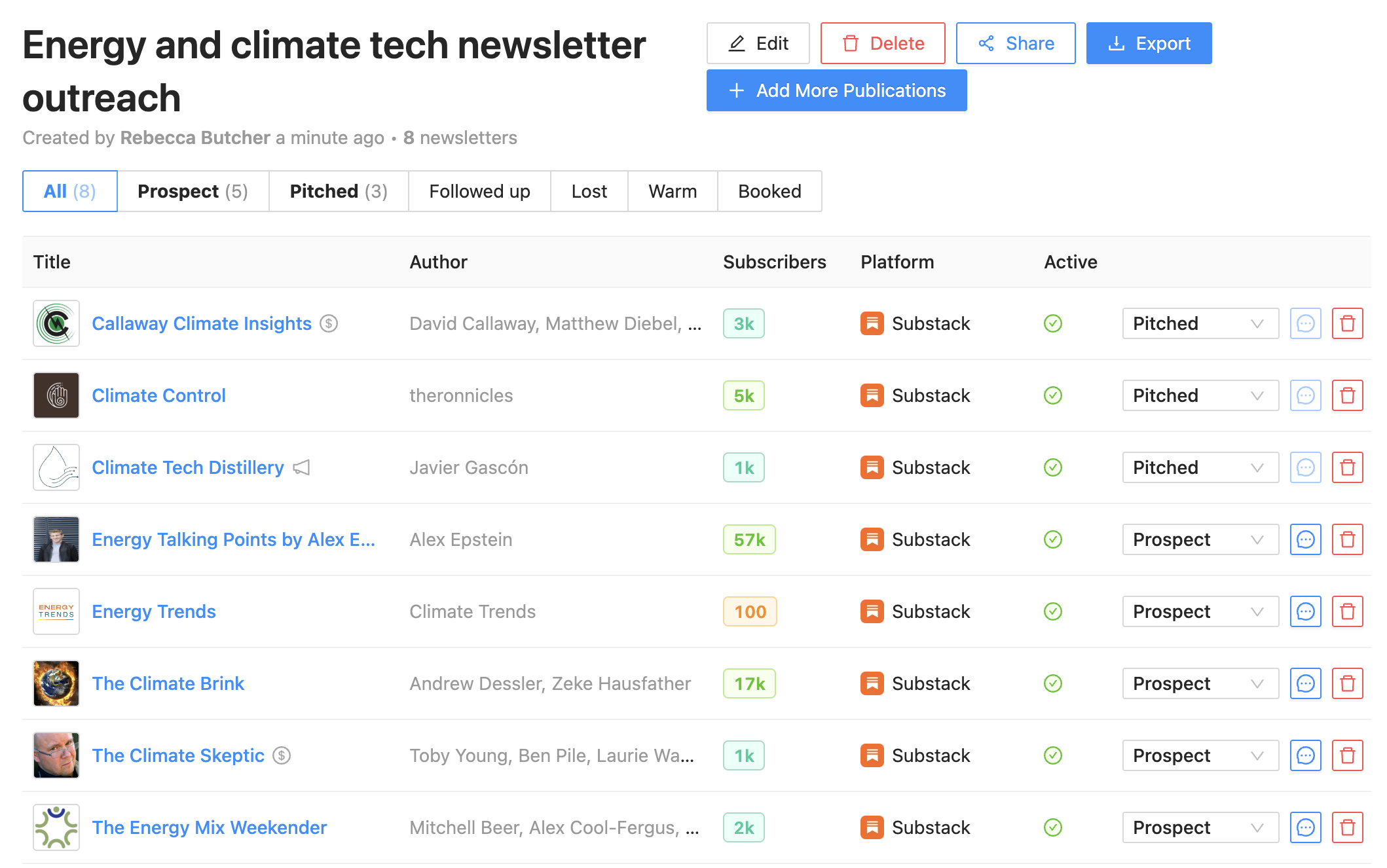
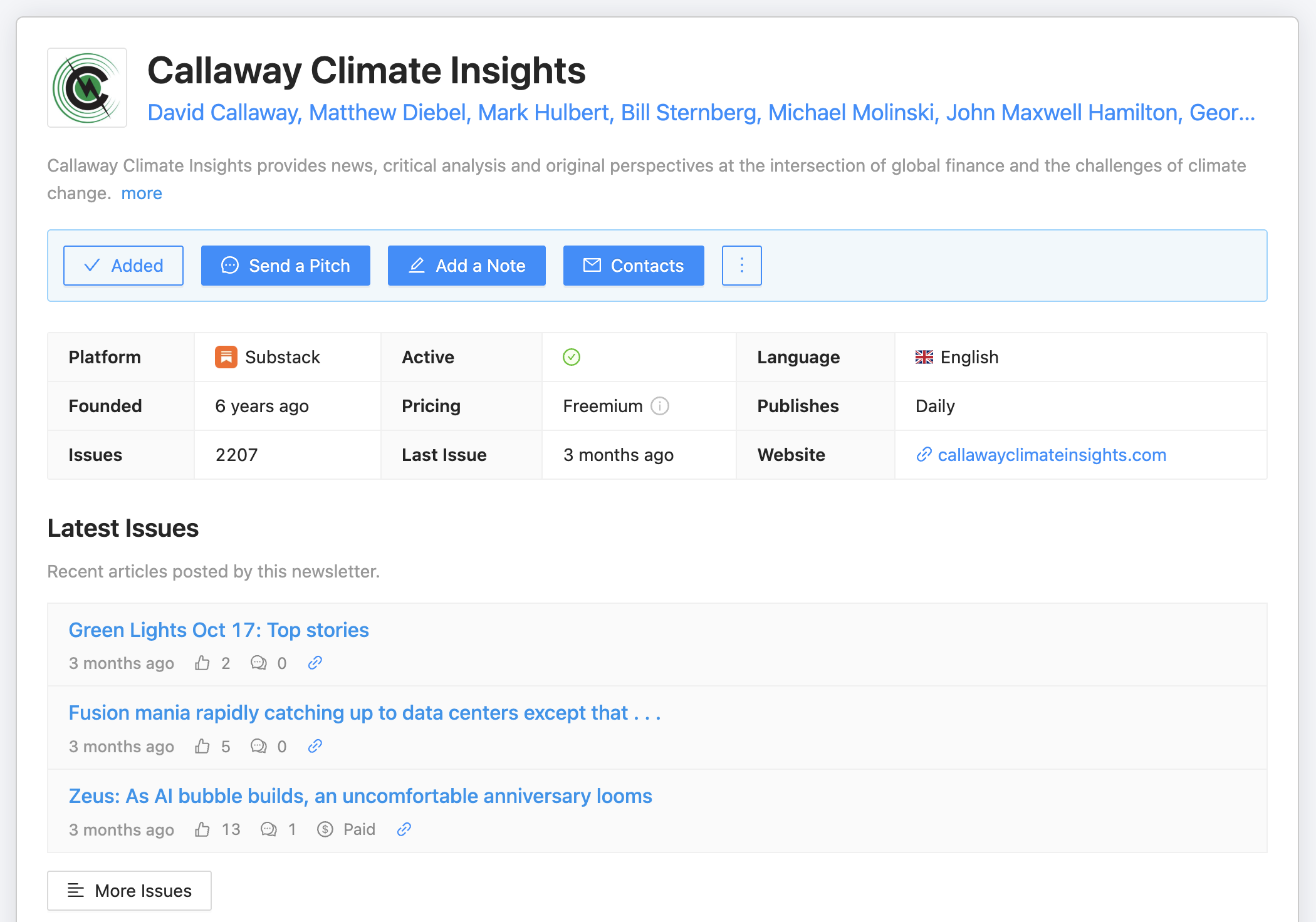
Open each newsletter’s link to view the data Reletter has collected (subscriber numbers, how many issues published, website and contact details, chart rankings, etc.), then open an issue or two to get a feel for its writing style or tone and the topics it covers.
3. Write a convincing pitch
You’re providing genuinely valuable, concise and relevant content that fits the newsletter audience. Now, you need to get the editor’s attention. Start with a compelling subject line (you want them to open the email).
Here's what to include:
- Why you picked them. Show you've read their newsletter by referring to a specific topic and issue.
- A convincing reason for them to mention you.
- The newsletter content (just a one-line hook if you can).
- The value (what their readers get/why they should care).
- The easy ask - some copy-paste content they can drop in as-is.
- Make your content super simple for them to use, with no pressure or strings attached.
Finally, keep your pitch brief (aim for 5-7 sentences max.) so it only takes the editor a few minutes to read.
4. Follow up once
As I said, you don't want the editor to feel pressured. However, often people will see your idea but forget to follow through with it.
So it's a good idea to follow up after a few days to check they got your email. That second email could be the reminder they need.
What if you don't have "news"?
Editors are often looking for fresh newsletter ideas, so if you don't have breaking news, data or links to share, try offering one of these ideas:
Template
Editors love templates because they’re instantly useful and easy to summarize in one line. Share a plug-and-play doc their audience can copy and use straightaway.
Checklist
Checklists work well in newsletters because they’re skimmable and feel practical. Offer a short list that helps readers avoid mistakes or move faster in their business.
Unique/controversial opinion
Pitch a clear take that challenges a common assumption and back it with reasoning or an authentic example.
Customer story with a lesson
Share a mini case study or success story. Mention a specific problem, what was tried, and the measurable or observable outcome. Make the lesson transferable so email subscribers can apply it even if they’re not your customer.
Upcoming events
Let the editor know about important upcoming events that might interest their loyal audience. Make them highly relevant to those readers. For example, you might highlight:
- Local events for location-specific newsletters
- Fundraisers for non profits
- A warning about regulatory deadlines (combine it with a "what to do" checklist),
- Calls for speakers, awards or grant applications
Final thoughts
Still wondering how to get mentioned in newsletters?
#1. Do your homework before you pitch any industry newsletter. Check their Reletter profile to find:
- Subscriber numbers
- Reader engagement
- Related newsletters (Other publications recommended by the newsletter authors)
#2. Use Reletter links to read a few issues. You're looking for:
- Style and tone (can you match it?)
- Content—do they use curated links or create original content?
- Mentions—which of the above mention-types do they use? Do they seem to have preferences?
#3. Send your pitch to the correct contact.
- Reletter does its best to provide up-to-date email addresses for each newsletter in its database. (Tap the Contacts button to see them.)
- Reletter also provides a website link. Some newsletters give details on how they prefer to be pitched, so it's a good idea to check for that before you hit send.
Ready to find industry newsletters and create your first newsletter target list?
Start searching with Reletter and get your first 7 days for free